
Resilience and Emotional Inteligence - REI501 - 2.5

Content organized by Valéria Feitosa de Moura from the book Comportamento organizacional, published in 2010 by Pearson Prentice Hall.
Measuring emotional intelligence
In previous classes we talked about the IQ test and that it does not measure all types of intelligence.
But is there a way to measure emotional intelligence? How can we know how emotionally intelligent a person is? There are several tests developed for this purpose. In this class you will learn about the Mayer, Salovey, Caruso Emotional Intelligence Test, known as MSCEIT (pronounced mess-keet).
Do people know how smart they are? It's easy to find out. First teach a group of people what IQ scores represent, then ask them to estimate their own IQ. Then take an IQ test and see if the two numbers match. What do you think happens? Are people generally accurate or inaccurate estimators of their intelligence?
Research by various scientists indicates that we are not very good at estimating our intellectual abilities. The correlation between estimated and actual IQ ranges from 0.15 to about 0.30. A correlation between 0.15 and 0.30 suggests that people have some understanding of how smart they are, but not much.
Correlations can range from 1.00, indicating a perfect relationship, to 0.00, indicating no relationship. There are also negative correlations, which means that a -1.00 correlation shows a perfectly negative relationship between two things: as one goes up, the other goes down.
If this self-esteem method doesn't work, you can ask someone else to help you. Ask a spotter to rate your IQ and maybe the result will be more accurate. In studies where teachers rated their students' IQ, the correlation increased to around 0.50 - a big improvement, but with plenty of room for error. Clearly, just asking people to rate their own abilities or those of others does not produce very satisfactory results.
If you can't ask people how smart they are, and you can't ask others how smart you are, how can we find out if you're smart or not? Well, what if we wanted to know how fast you can type? In that case, we will probably administer a typing test; you will be given some pages and you must type them. We would count the number of words you typed correctly, and that would be your typing skill or typing speed. Then, by administering a typing test to a large, representative sample of people, we would be able to rate their typing ability against the ability of others. We could, in effect, calculate their typing quotient.
Emotional skills can also be measured objectively through the use of skill, performance, or knowledge tests. These tests ask a series of questions like these:
This is more or less what the Mayer, Salovey, Caruso Emotional Intelligence Test (the MSCEIT) does. The MSCEIT asks people to solve emotional problems and the correctness of the answers is evaluated.
In turn, a person's scores are compared to a large normative database (either from the general public or from emotion experts) to calculate a sort of emotional skill quotient. Although this score may be called EQ (emotional quotient), it is more appropriate to call the scores emotional intelligence quotient or EI (emotional intelligence) score. The term EQ is often used to refer to non-skills-based approaches to assess emotional intelligence.
Mayer, Salovey, Caruso Emotional Intelligence Test (MSCEIT - pronounced mess-keet) is named after psychology professors who began researching emotions as a form of intelligence.
One concern people raise about a skill approach to testing emotional intelligence is that intelligence tests assume there are right and wrong answers. However, how can a feeling be right or wrong? Take the example of assessing how accurate a person is in identifying other people's emotions. Consider a person who has a huge smile on his/her face. His/her eyes are twinkling, his/her mouth is lifted in a big smile, and he/she's laughing. How is this person feeling? If you said "angry" because you felt it possible that the person is angry, you are probably wrong. Not all items on the emotional intelligence test can be assessed this way, but many certainly can.
The EI tests were created in a way that uses the exact same guidelines that the IQ assessments have implemented. In an EI assessment, you may be dealing with a real-life circumstance that you might actually face on any given day. You may be presented to several answers and instructed to select the one that most accurately fits your case. The key distinction between an EI and an IQ assessment is that the questions on an EI test will not have a right or wrong answer. For example, on an IQ test, each question has one correct answer. On the other hand, an EI test provides possible answers that can be discussed by the participant. The truth is, you may be in a position to argue that all the answers shown are to some extent correct. EI assessment creators typically use two ways to select the accuracy of an answer: normative groups and expert analysis..
The MSCEIT test assesses the various areas of emotional intelligence. This test assesses how you perceive emotions, how you use emotions to guide your thinking. The assessment covers 4 areas: perceiving emotions, using emotions to guide thinking, understanding emotions to predict actions, and manipulating emotions. We have already learned about these four areas throughout the course, Table 1 presents a summary of them.
The MSCEIT has 141 items and takes about forty-five minutes to complete, your scores are compared to a normative database of five thousand people. To learn more about the test, visit the link.
Link: www.emotionaliq.org Accessed on November 03, 2020
In this class you learned that the emotional intelligence tests were created in a way that uses the exact same guidelines that the IQ assessments have implemented. In emotional intelligence assessments, you can deal with a real-life circumstance that you might actually face on any given day. In this class you specifically learned with the MSCEIT test, which assesses the various areas of emotional intelligence: perceiving emotions, using emotions to guide thinking, understanding emotions to predict actions, and manipulating emotions.
Bibliographical
References
CARUSO, David R.; SALOVEY, Peter. The emotionally intelligent manager: How to develop and use the four key emotional skills of leadership. John Wiley & Sons, 2004.
Resilience and Emotional Inteligence - REI501 - 2.5
Measuring emotional intelligence
Images: shutterstock


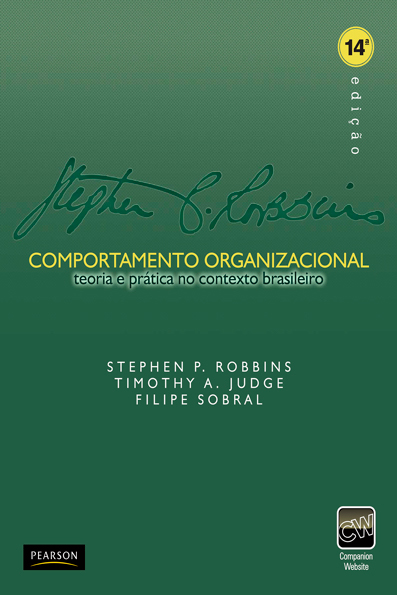
Reference Book:
Comportamento organizacional
ROBBINS, Stephen P.; JUDGE, Timothy A.; SOBRAL, Filipe.
Pearson Prentice Hall, 2010.


MUST University®: licensed by Florida Commission for Independent Education, License: 5593.